
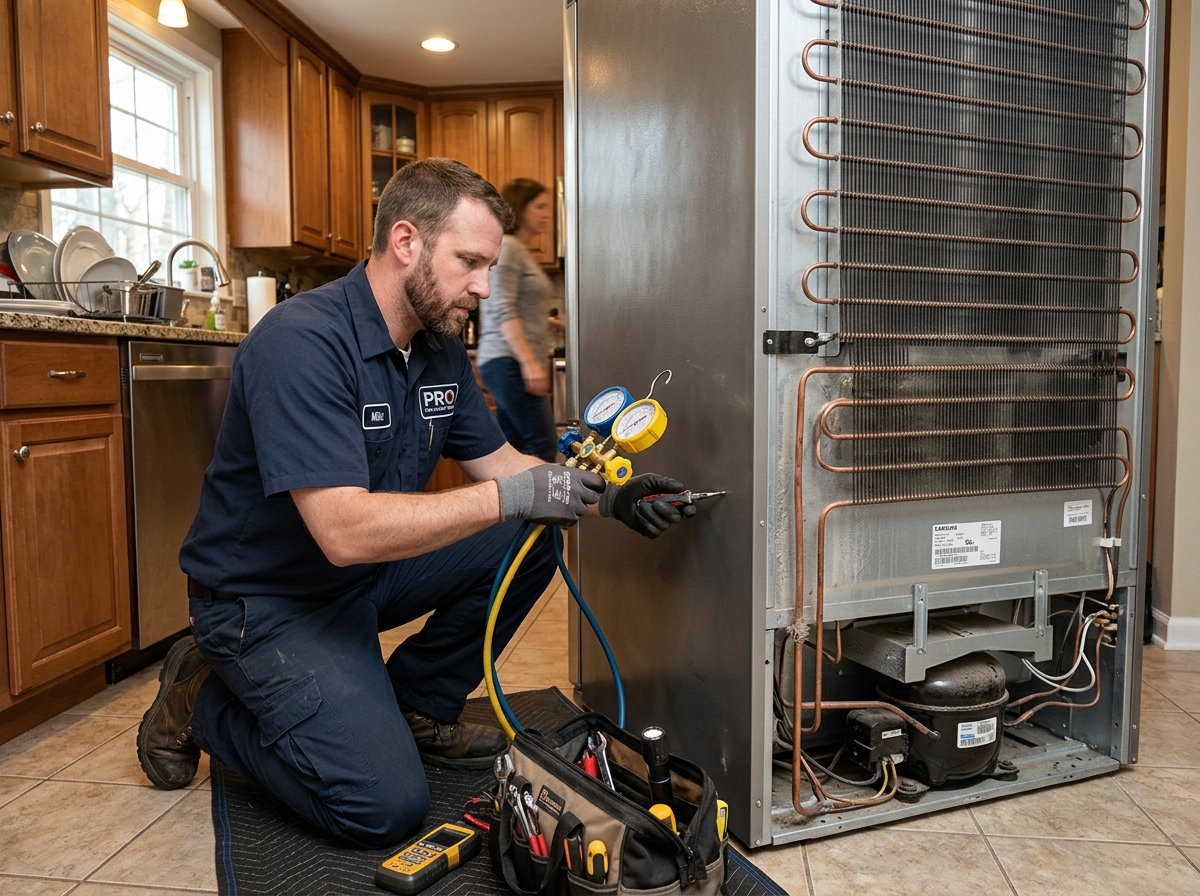
Compressor or Starter Relay?
A clicking refrigerator does not automatically mean its compressor needs replacement. The start relay or overload device may be faulty, but a compressor or electrical fault is also possible. Ask the technician to test the relevant components before making a recommendation.
Repeated Clicking
Ask for a check of the start relay, overload protector and supply voltage. These are potential causes of repeated start attempts and clicking.
Compressor Failure
A qualified technician may inspect winding resistance, grounding, start components and operating conditions before deciding whether a compressor replacement is justified.
What a Proper Refrigerant Repair Involves
A sealed refrigeration system should not need routine top-ups. If refrigerant is low, ask the technician how they will identify and repair the leak, verify the system and charge it according to the manufacturer's specifications.
Locate and repair the leak
Ask about an appropriate leak-detection method, which can include dry nitrogen pressure testing by a trained technician. Never attempt sealed-system testing yourself.
Prepare and verify the system
Where required by the repair procedure, the technician replaces the filter-drier, evacuates the sealed system and checks the repair before charging.
Charge to the specified quantity
The correct refrigerant type and quantity should match the appliance rating plate and service instructions. Ask for the details to be recorded on the invoice.
Note: Refrigerants and pressurized systems can be hazardous, including flammability risks for some types. Sealed-system work belongs with a qualified professional.
Three Questions to Ask on the Phone
Use these questions to compare estimates, repair procedures and accountability before the visit.
“Does your recharge quote include finding and fixing the leak, and what testing will you perform?”
Clarify what is included and whether filter-drier replacement is necessary for the proposed repair. Request an itemized quotation.
“What written warranty do you provide on the sealed-system repair and the parts used?”
Confirm the period, coverage, exclusions and how to request follow-up service. Warranty terms vary by provider and repair.
“Will you test the start relay and overload device before recommending a new compressor?”
Ask for measured findings or a written explanation of why the proposed repair is necessary.
Check the Work Before Closing the Job
Ask the technician to demonstrate normal operation and explain what tests have been completed. Full temperature stabilization may take several hours.
Confirm that unusual clicking, vibration or error indications have been investigated rather than dismissed.
Request details of replaced components and the repair performed, including sealed-system work where applicable.
Collect an itemized receipt showing the diagnostic charge, parts, labor and written warranty conditions.